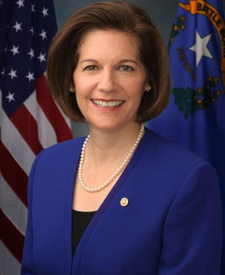
Senator Catherine Cortez Masto (D-NV), in office since 2017, presents a relatively clean self-dealing profile. Public disclosures and trackers show she holds her assets in mutual funds, retirement accounts, and bank holdings rather than trading individual stocks, eliminating STOCK Act timing/committee-overlap concerns; FactCheck.org found she was already a millionaire before office and her net worth grew only modestly (not "doubling" as claimed in attack ads). She is a substantial recipient of finance, securities, and legal-industry money while serving on the Banking and Finance Committees (correlation, not proof), and she has co-sponsored congressional stock-trading bans (the ETHICS Act). Her voting attendance is strong (1.2% missed, better than the Senate median), and no documented campaign personal-use scandal or family-lobbying pipeline tied to her Senate office surfaced in public records.
Public record
In Congress since
2017
Committees
Banking, Housing, and Urban Affairs Energy and Natural Resources Finance Indian Affairs
Missed votes, 119th Congress
2.0% (18 of 915; median member 1.9%)
Campaign money, 2025–26 cycle
$2.2M raised · 12% from PACs & committees · $3.4M cash on hand FEC ↗
H.R. 7008 bans new stock purchases by members, spouses and dependents; it doesn't force sales of existing holdings. The Senate vote was on the version paired with the SAVE Act, which is why no Democrat voted yes. Full breakdown →
Disclosed stock trades
No periodic transaction reports on file since 2024. That's the norm: most members don't trade individual stocks, or hold them in blind trusts and diversified funds.
Amounts are the ranges members must report, not exact values. The STOCK Act requires a report within 45 days of a trade; "late" counts days past that deadline, measured to the filing date.
How the score breaks down
Stock self-trading
25% weight
0
No individual-stock trading. Disclosures and Quiver Quantitative show holdings in mutual funds, a state pension (PERS), and bank accounts (e.g., up to $5M Town & Country Bank) rather than self-directed single-stock trades; Quiver tracks ~$0 in trackable publicly traded equities. She co-sponsors the ETHICS Act banning member stock trading. Per rubric, 0 when no individual-stock trading.
Modest growth from pre-existing wealth. FactCheck.org found she was a millionaire before her Senate tenure ($1.24M-$2.88M in 2015-16) and that her net worth grew to roughly $2.1M-$3.6M by 2021 - significantly less than the 'doubling' alleged in attack ads, and broadly consistent with salary plus passive market gains. No reported liabilities. Growth appears within normal market/salary bounds; pre-office wealth not scored.
Money → action alignmentcorrelation, not proof of any quid-pro-quo
20% weight
40
Correlation, not proof. She is a significant recipient of finance/securities/insurance and lawyer/lobbyist money while sitting on the Banking, Housing & Urban Affairs Committee (incl. Securities, Insurance & Investment subcommittee) and the Finance Committee - a structural overlap between donor industries and her jurisdiction. OpenSecrets tracks finance, real estate, and legal sectors among her top industries. No specific quid pro quo or anomalous vote documented; reflects routine donor-committee alignment common to senators with this portfolio.
No documented misuse of campaign or leadership-PAC funds for personal benefit found in public records. Her campaign committee files standard FEC reports; she has publicly advocated routing illegal contributions to the Treasury. No FEC enforcement action or credible reporting of personal-use spending identified. Per rubric, absence is not penalized.
Limited. Husband Paul Masto, a retired Secret Service agent, has provided security services to Nevada cannabis businesses (GreenMart, Silver Leaf Farms) - a private-sector role, not lobbying tied to her Senate office. A separate fundraising-party controversy dates to her tenure as state Attorney General, predating the Senate. No documented family lobbying contracts or staff-to-lobbyist pipeline tied to her current office surfaced.
Strong attendance. GovTrack records 46 of 3,787 roll-call votes missed (1.2%) from 2017 to mid-2026, better than the Senate median (~2.8%); she ranked among the most present senators in 2022. No evidence that fundraising or paid speeches displaced legislative duties. Low score reflects diligent attendance.
Sources behind this score: 2 data aggregator · 3 official record · 2 news reporting · 3 reference database. Score = weighted average of the components that have data; the 1 without sourced evidence are excluded, never counted against the member. Methodology →
Embed this score on your site
Updates automatically when the score changes.
Right of reply
Is something here wrong or missing context? Members and their staff can send a correction or a statement. Statements are published on this page in full, and corrections go in the public log. Email corrections@greederboard.com.