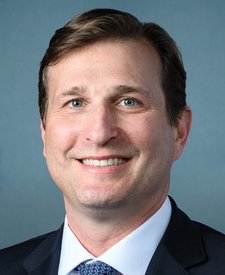
Rep. Dan Goldman (D-NY-10), an heir to the Levi Strauss fortune and among the wealthiest members of Congress (estimated net worth ~$184M-$253M, predating his 2023 entry to office), conducted hundreds of individual securities trades during his first year in office despite a 2022 campaign pledge to use a blind trust; STOCK Act filings have been parsed showing trade activity in the tens of millions of dollars across sectors including defense, pharmaceuticals, finance, and tobacco. Reporting flagged potential conflicts because some holdings (e.g., defense contractors Raytheon, L3Harris, Northrop Grumman) operate in areas overseen by his Homeland Security and Oversight committee assignments, and he sold bank stocks (First Republic, PacWest) shortly before those banks collapsed or required bailouts, though his office said an investment adviser managed the portfolio without his involvement. In July 2023 he sold up to $37.1M in stocks and bonds, and on April 23, 2025 his office announced he had finalized placing his assets into qualified blind trusts and divested individual stock holdings. His campaign funding is concentrated in the securities and investment industry (his largest sector at ~$628K for 2023-24, with Goldman Sachs a top donor), a correlation that is not proof of any quid pro quo. No public evidence of campaign-fund personal use, family lobbying, or fundraising-linked vote-skipping was found, though his 7.2% missed-vote rate exceeds the chamber median.
Public record
In Congress since
2023
Committees
Judiciary Homeland Security
Missed votes, 119th Congress
12.2% (82 of 674; median member 1.9%)
Campaign money, 2025–26 cycle
$8.4M raised · 6% from PACs & committees · $1.2M cash on hand FEC ↗
H.R. 7008 bans new stock purchases by members, spouses and dependents; it doesn't force sales of existing holdings. The Senate vote was on the version paired with the SAVE Act, which is why no Democrat voted yes. Full breakdown →
Amounts are the ranges members must report, not exact values. The STOCK Act requires a report within 45 days of a trade; "late" counts days past that deadline, measured to the filing date.
How the score breaks down
Stock self-tradinghousehold / spouse
25% weight
78
Conducted hundreds of individual stock trades (~500 in his first months in office) with STOCK Act filings parsed showing tens of millions in activity, across sectors including defense, pharma, finance and tobacco. Several holdings (Raytheon, L3Harris, Northrop Grumman) overlap his Homeland Security/Oversight committee jurisdiction, and he sold First Republic and PacWest bank shares days before their collapse/bailout. His office attributed trades to an investment adviser; he divested and finalized a blind trust by April 2025. No STOCK Act late-filing fine was found.
Goldman's large fortune (estimated ~$184M-$253M) derives from being a Levi Strauss heir and predates his 2023 entry to Congress, so it is excluded from scoring. No sourced evidence shows net-worth growth beyond salary and broad-market returns attributable to his time in office.
Money → action alignmentcorrelation, not proof of any quid-pro-quo
20% weight
35
Correlation, not proof: Goldman's campaign money is concentrated in the securities and investment industry (his top sector at ~$628K for 2023-24), with Goldman Sachs a top donor to his victory fund, and he represents a Wall Street-adjacent district. AIPAC was also a major contributor. No quid-pro-quo is asserted; this reflects donor concentration alongside sector alignment only.
No sourced public evidence of campaign or leadership-PAC funds spent on personal-benefit categories was found. His self-funding via a $4.9M personal loan (never repaid) is a candidate contribution to the campaign, not personal use of campaign funds, and does not score under this rubric.
Goldman's wife, Corinne Levy Goldman, serves as his campaign treasurer (a compliance role), but no evidence indicates she or other family members lobby or hold contracts tied to his office, and no staff-to-lobbyist pipeline was documented. The treasurer role is a minor, common arrangement rather than self-dealing.
GovTrack reports Goldman missed 132 of 1,825 roll-call votes (7.2%) from January 2023 to June 2026, above the ~2.1% median for currently serving representatives. No sourced evidence links these absences to fundraising events or paid speeches, so the elevated miss rate alone supports only a modest score.
Sources behind this score: 4 news reporting · 1 official record · 3 reference database · 1 data aggregator. Score = weighted average of the components that have data; the 2 without sourced evidence are excluded, never counted against the member. Methodology →
Embed this score on your site
Updates automatically when the score changes.
Right of reply
Is something here wrong or missing context? Members and their staff can send a correction or a statement. Statements are published on this page in full, and corrections go in the public log. Email corrections@greederboard.com.