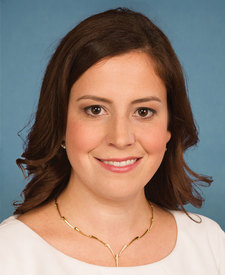
Elise M. Stefanik
Elise Stefanik (R-NY-21) presents a largely clean record on direct financial self-dealing: public statements and stock-tracking databases indicate her household does not trade individual stocks, and she co-signed a discharge petition to ban congressional stock trading. Her financial disclosures show modest assets substantially offset by liabilities, and available data do not establish net-worth enrichment beyond salary and market returns. Her campaign fundraising is concentrated among gun-rights (~$404K in 2024), pro-Israel/AIPAC (~$204K), oil-and-gas (~$170K), and finance interests, and her legislative activity on firearms aligns with those donors—an alignment that is correlation, not proof of any quid pro quo. The most notable accountability concern is a family-tied industry connection: her husband, Matt Manda, works in public affairs for the National Shooting Sports Foundation, a gun-industry trade group, an arrangement ethics experts have called "legal but dubious." No sourced evidence was found of campaign or leadership-PAC funds used for personal benefit, and her missed-vote rate (2.1% lifetime) is on par with the congressional median, indicating no fundraising-driven neglect of duties.
Public record
- In Congress since
- 2015
- Committees
- Armed Services
House Permanent Select Committee on Intelligence
Education and Workforce - Missed votes, 119th Congress
- 16.3% (110 of 674; median member 1.9%)
- Campaign money, 2025–26 cycle
- $5.0M raised · 6% from PACs & committees · $11M cash on hand FEC ↗
The stock-trading ban
H.R. 7008 bans new stock purchases by members, spouses and dependents; it doesn't force sales of existing holdings. The Senate vote was on the version paired with the SAVE Act, which is why no Democrat voted yes. Full breakdown →
Disclosed stock trades
No periodic transaction reports on file since 2024. That's the norm: most members don't trade individual stocks, or hold them in blind trusts and diversified funds.
Amounts are the ranges members must report, not exact values. The STOCK Act requires a report within 45 days of a trade; "late" counts days past that deadline, measured to the filing date.
How the score breaks down
Sources behind this score: 3 news reporting · 3 data aggregator · 5 reference database · 1 official record. Score = weighted average of the components that have data; the 1 without sourced evidence are excluded, never counted against the member. Methodology →
Embed this score on your site

Updates automatically when the score changes.
Right of reply
Is something here wrong or missing context? Members and their staff can send a correction or a statement. Statements are published on this page in full, and corrections go in the public log. Email corrections@greederboard.com.