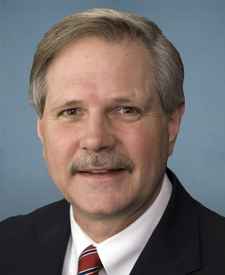
Senator John Hoeven (R-ND), a former banker and one of the wealthiest members of the Senate, has a clean attendance record (1.9% missed votes) and no documented campaign personal-use findings. His most notable accountability flag is high-volume individual-stock trading (~$68.7M across ~220 disclosed trades, 2018-2021), though the portfolio skews to healthcare/tech rather than his committee sectors and shows no documented suspicious timing or insider returns. As a senior member of the Agriculture, Appropriations, and Energy committees, his agribusiness and energy donor base aligns with his legislative advocacy, a correlation expected for a North Dakota senator and not proof of impropriety. A documented staff-to-lobbyist revolving door exists but is typical of Congress; his large wealth predates office and cannot be scored as tenure-driven enrichment from available records.
Public record
In Congress since
2011
Committees
Agriculture, Nutrition, and Forestry Appropriations Energy and Natural Resources Indian Affairs
Missed votes, 119th Congress
1.0% (9 of 915; median member 1.9%)
Campaign money, 2025–26 cycle
$390K raised · 45% from PACs & committees · $675K cash on hand FEC ↗
H.R. 7008 bans new stock purchases by members, spouses and dependents; it doesn't force sales of existing holdings. The Senate vote was on the version paired with the SAVE Act, which is why no Democrat voted yes. Full breakdown →
Disclosed stock trades
No periodic transaction reports on file since 2024. That's the norm: most members don't trade individual stocks, or hold them in blind trusts and diversified funds.
Amounts are the ranges members must report, not exact values. The STOCK Act requires a report within 45 days of a trade; "late" counts days past that deadline, measured to the filing date.
How the score breaks down
Stock self-trading
25% weight
58
High-volume individual-stock trader: ~220 disclosed trades worth ~$68.7M (2018-2021), 175 of them individual stocks, skewed to purchases (153 buys vs 67 sells). Sector clusters in healthcare and technology. As a senior member of Agriculture, Appropriations, and Energy committees, the healthcare/tech tilt is not directly committee-aligned, but volume and dollar size are large. No public evidence of documented insider-timed trades or market-beating returns; private bank-holding positions (BRFG/BRFI, $5M-$25M each) are pre-office assets, not active trading.
Hoeven is among the wealthiest senators (~$46.7M in 2018; 2023 disclosure range $22.5M-$96.8M). His fortune predates office, derived from his banking career (Westbrand/Bank of North Dakota leadership) and private holdings valued $5M-$25M. Pre-office wealth is not scored, and public records do not isolate growth beyond salary plus market returns attributable to his tenure. Scored 0 per rule against penalizing pre-existing wealth absent evidence of tenure-driven enrichment.
Money → action alignmentcorrelation, not proof of any quid-pro-quo
20% weight
40
CORRELATION, NOT PROOF. Hoeven is a senior member of the Agriculture and Energy committees and chair/ranking member of Agriculture Appropriations, the panels most relevant to farm-subsidy and energy interests, and he is a consistent advocate for North Dakota agribusiness and oil/gas. Agribusiness and energy are among his natural donor bases via PACs and his Dakota PAC leadership PAC. This donor-vote alignment is structural and expected for an ND senator; no record establishes a quid pro quo. Exact dollar concentrations were not fully retrievable (OpenSecrets blocked), so confidence is medium.
No public record of an FEC complaint or finding that Hoeven used campaign or his Dakota PAC leadership-PAC funds for personal benefit was located. General reporting notes leadership PACs broadly are prone to personal-use abuse, but nothing ties a specific personal-use allegation to Hoeven. Scored 0 per the no-data rule.
Documented staff-to-lobbyist pipeline: LegiStorm records show former Hoeven aides moving to/from industry lobbying, including a U.S. Beet Sugar Association lobbyist joining his staff, his policy adviser hired by the land-title insurance trade group after it met with the senator, and his health policy adviser hired by the largest pharmaceutical lobbying group (PhRMA). This is common in Congress and not unique to Hoeven, and no family member is shown lobbying his office, so the score is moderate, not high.
Strong attendance: missed 101 of 5,420 roll-call votes (1.9%) from Jan 2011 to June 2026, better than the ~2.8% median for sitting senators. No evidence of heavy missed votes paired with fundraising/paid-speech activity. Low score reflects a clean attendance record.
Sources behind this score: 1 data aggregator · 1 news reporting · 5 reference database · 2 official record. Score = weighted average of the components that have data; the 2 without sourced evidence are excluded, never counted against the member. Methodology →
Embed this score on your site
Updates automatically when the score changes.
Right of reply
Is something here wrong or missing context? Members and their staff can send a correction or a statement. Statements are published on this page in full, and corrections go in the public log. Email corrections@greederboard.com.