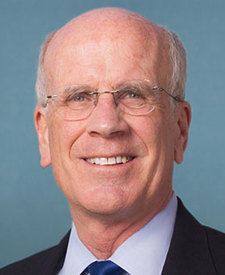
Senator Peter Welch (D-VT), in office in the House from 2007-2023 and the Senate since 2023, has a relatively clean self-dealing profile. He historically held a portfolio of individual stocks (largely managed/associated with his wife Margaret Cheney) and disclosed dozens of sales, but after a STOCK Act late-disclosure complaint in 2021 he pledged to stop owning individual stocks and shifted into funds and cash reserves; he is a co-sponsor of congressional stock-trade ban legislation. His estimated ~$10.8M net worth makes him one of the wealthier members, but much of that wealth predates or tracks normal market growth rather than demonstrable office-driven enrichment. His donor base is concentrated in trade-association PACs (medical, real estate, agriculture/dairy, retail) that overlap with his committee work, which is a correlation worth noting but not proof of vote-buying. No credible reporting indicates campaign-fund personal use, family lobbying tied to his office, or excessive missed votes paired with paid speech income.
Public record
In Congress since
2007
Committees
Agriculture, Nutrition, and Forestry Finance Rules and Administration Judiciary
Missed votes, 119th Congress
5.8% (53 of 915; median member 1.9%)
Campaign money, 2025–26 cycle
$219K raised · 17% from PACs & committees · $1.6M cash on hand FEC ↗
The stock-trading ban
Senate cloture on H.R. 7008, Sep 30, 2026
No
Cosponsored a ban bill
None
H.R. 7008 bans new stock purchases by members, spouses and dependents; it doesn't force sales of existing holdings. The Senate vote was on the version paired with the SAVE Act, which is why no Democrat voted yes. Full breakdown →
Disclosed stock trades
No periodic transaction reports on file since 2024. That's the norm: most members don't trade individual stocks, or hold them in blind trusts and diversified funds.
Amounts are the ranges members must report, not exact values. The STOCK Act requires a report within 45 days of a trade; "late" counts days past that deadline, measured to the filing date.
How the score breaks down
Stock self-tradinghousehold / spouse
25% weight
28
Disclosed ~83 trades across ~41 companies (cumulative ~$0.9M-$2.3M parsed), nearly all SALES concentrated in 2018 and Nov 2021, from a portfolio largely tied to his wife. A late disclosure of her ExxonMobil trades (days before he questioned Exxon's CEO at an Oversight hearing) drew a 2021 STOCK Act complaint. He then pledged in 2020/2021 to stop owning individual stocks, divested into funds/cash (e.g., up to $1M FDRXX), and co-sponsors a trading-ban bill. Score reflects past committee-sector overlap and one suspicious-timing episode, partially mitigated by divestment and no evidence of market-beating active trading.
Estimated net worth ~$10.8M (June 2026), up from a 2023 disclosure range midpoint, making him one of the wealthier members of Congress (~107th). Growth largely tracks normal market appreciation of a substantial pre-existing portfolio (e.g., monthly 'net worth update' estimates of +$100K-$490K reflect market moves on holdings, not new income). No evidence of enrichment beyond salary+market attributable to office; pre-office wealth is not scored. Low score reflects absence of anomalous, office-driven growth.
Money → action alignmentcorrelation, not proof of any quid-pro-quo
20% weight
30
CORRELATION, NOT PROOF. Welch pledged to refuse 'corporate PAC' money but accepts substantial trade-association PAC money (medical, real estate, dairy/agriculture, retail). In Q1 2022 alone, ~$226K of $839K raised came from political committees including these PACs. Several donor sectors overlap his Finance, Agriculture, and Judiciary committee jurisdictions (dairy/agriculture, healthcare, real estate). This is a notable industry-concentration pattern, but no specific quid-pro-quo vote tied to a donor is documented; score reflects correlation only.
No documented evidence of family members lobbying or holding contracts tied to Welch's office, nor a notable staff-to-lobbyist pipeline. No reporting surfaced; absence is not penalized.
Welch missed 60 of 1,473 roll-call votes (4.1%) from Jan 2007 to June 2026, slightly worse than the ~2.8% median for currently serving senators but not extreme. No evidence of heavy paid-speech income or fundraising activity displacing legislative duties. Low score reflects modestly above-median absenteeism with no aggravating fundraising pattern.
Sources behind this score: 2 news reporting · 2 data aggregator · 3 reference database · 2 official record. Score = weighted average of the components that have data; the 2 without sourced evidence are excluded, never counted against the member. Methodology →
Embed this score on your site
Updates automatically when the score changes.
Right of reply
Is something here wrong or missing context? Members and their staff can send a correction or a statement. Statements are published on this page in full, and corrections go in the public log. Email corrections@greederboard.com.