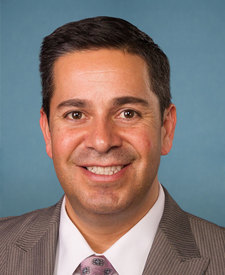
Ben Ray Luján
9/100
Low#322 (tied) of 539 scored · scored on 6 of 6 components
Driven by Money→
A signal of self-dealing risk from public records, by a published formula. Not a finding of wrongdoing.
Where Luján sits among 539 scored members Score 0–100 · one dot per member
Senator Ben Ray Luján (D-NM) scores 9 of 100; his highest sub-score is money → action (23).
Read the full summary
He does not own or trade individual stocks and has co-sponsored multiple congressional stock-trading bans (ETHICS Act, Ban Congressional Stock Trading Act), and his disclosed net worth is modest (roughly $167K–$430K in 2023), dominated by savings accounts and a state pension rather than market assets. He pledged to refuse corporate PAC money in his 2020 Senate run; industry money correlations exist but no specific quid-pro-quo is documented. He missed 12 of 915 roll-call votes in the 119th Congress (1.3%, below the 2.2% Senate median).
Drafted by AI research agents from the linked sources and not individually reviewed by a person. Spot an error? Tell us: corrections are reviewed within 2 business days.
How the score breaks down
The score is a weighted average over the components that have data (100 of 100 weight points here). Each row shows its share. How sub-scores are set →
Measured from the member's own annual disclosures, the same way for every member. The formula
Sum of contributions 9.2 → score 9
Sources behind this score: 11 official records · 6 reference databases · 1 encyclopedia entry. Score = weighted average of the components that have data. All six have data here. Methodology →
Embed this score

Updates automatically when the score changes.
Public record
- In Congress since
- 2009
- Committees
- Agriculture, Nutrition, and Forestry
Commerce, Science, and Transportation
Finance
Indian Affairs
Budget
United States Senate Caucus on International Narcotics Control - Missed votes, 119th Congress
- 1.3% (12 of 915; Senate median 2.2%)
- Campaign money, 2025–26 cycle
- $6.4M raised · 32% from PACs & committees · $3.6M cash on hand FEC ↗
The stock-trading ban
H.R. 7008 bans new stock purchases by members, spouses and dependents; it doesn't force sales of existing holdings. In the Senate it carried SAVE Act voter-ID language, and Democrats also called it too weak because members keep the stock they already own; no Democrat voted yes. Full breakdown →
Disclosed trades stocks, options, bonds
No periodic transaction reports on file since January 2025. That's the norm: most members don't trade individual stocks, or hold them in blind trusts and diversified funds.
Right of reply
Is something here wrong or missing context? Members and their staff can send a correction or a statement. Statements are published on this page in full, and corrections go in the public log. Email corrections@greederboard.com.